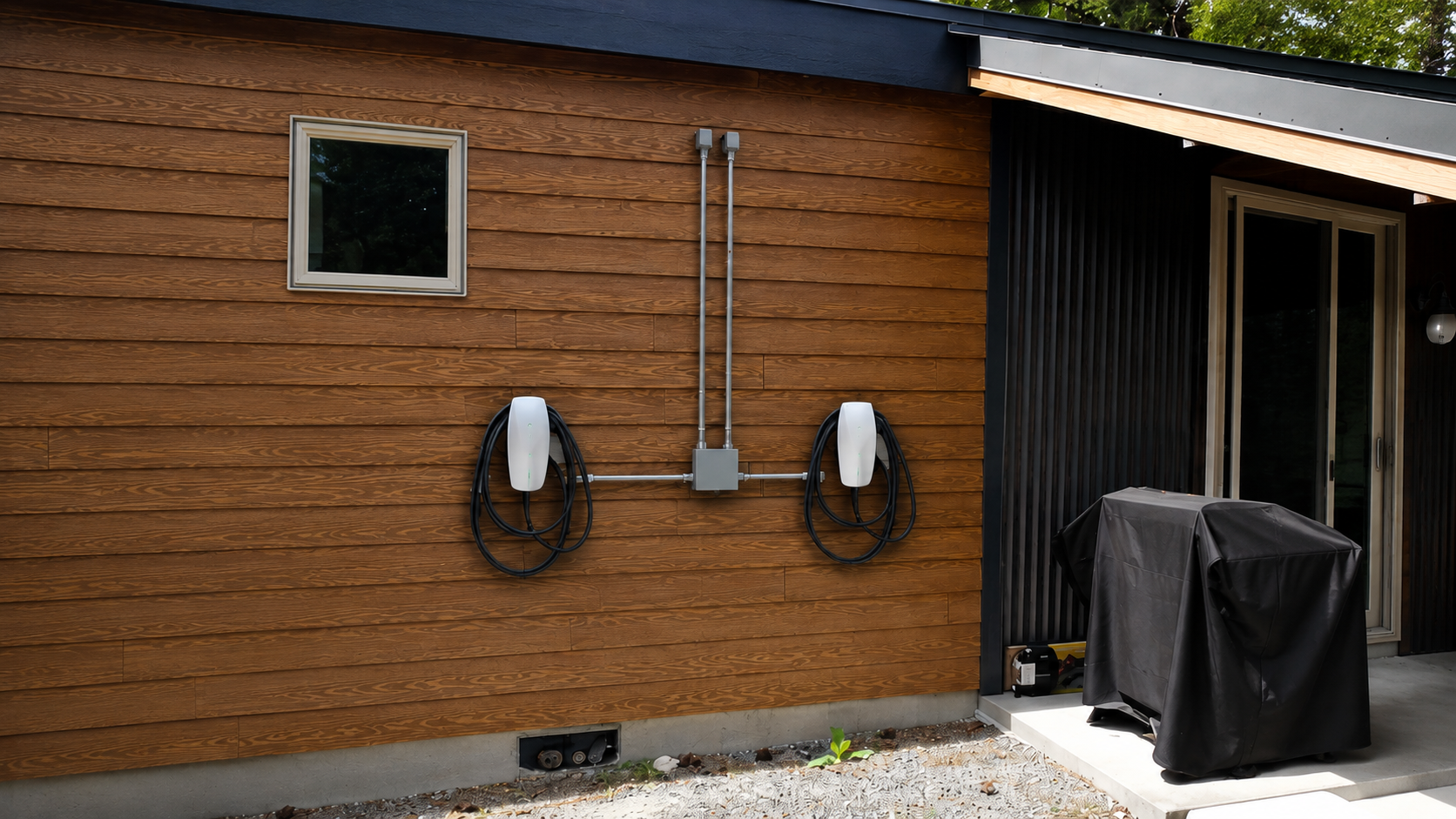
More households across Seattle, WA, are facing the same question these days: how do you keep two EV chargers running overnight without overloading your home’s electrical system? A few years ago, multiple EV chargers at home was a rare setup. Now, between families in Ballard picking up a second EV and townhomes in Bellevue adding a Rivian alongside a Tesla, a dual EV charger setup is becoming routine.
The Department of Energy expects the bulk of EV charging to happen at home and at work, with home charging making up the largest share of demand going forward, and estimates the country will need roughly 28 million charging ports by 2030 to keep pace. For homeowners across Capitol Hill, Queen Anne, West Seattle, Shoreline, and nearby neighborhoods, that means it’s worth understanding your options before a second charger just gets bolted onto the wall.
The Quick Answer: Can You Charge Two EVs at Home?
Yes, and most homeowners have three realistic paths to get there.
| Option | Best For |
| Two dedicated charging circuits | Homes with strong electrical capacity |
| One circuit with a charger splitter | Moderate, everyday charging needs |
| Smart load balancing system | Homes wanting maximum efficiency |
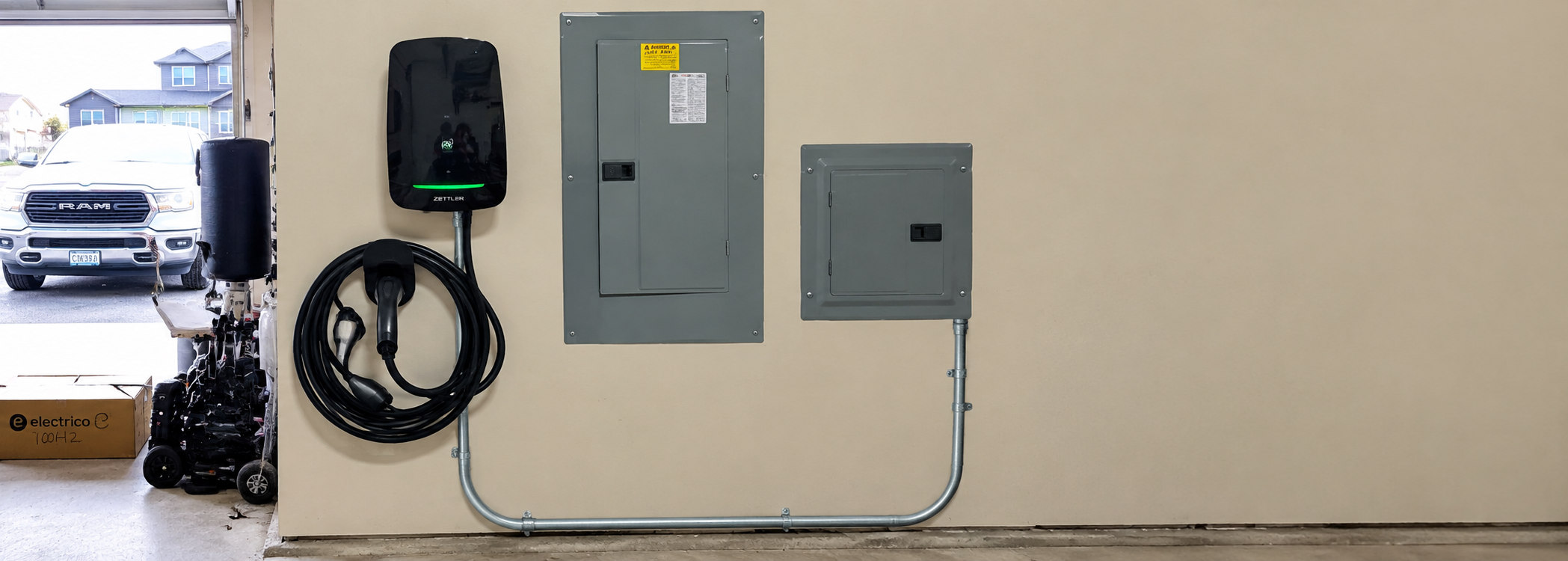
Which one fits depends on your existing electrical setup, available panel capacity, how often each vehicle actually drives, battery size, and whether more EVs might join the household later. The mistake to avoid is assuming any charger can simply get added to whatever panel is already there. Every installation really should start with a look at your home electrical panel for EV charger capacity before equipment gets chosen.
The Gold Standard: Two Chargers, Two Dedicated Circuits
For homeowners who want the fastest charging with no compromises, separate circuits remain the top choice. Each vehicle has its own charger on its own circuit, so both can charge at full speed simultaneously without one affecting the other, essentially giving each car its own private lane on the electrical highway.
Why Homeowners Prefer This Setup
- Fast, uncompromised charging speeds
- No waiting for one vehicle to finish before the next starts
- More convenience day to day
- Room to add another EV later without a redo
- A nice bump to overall property appeal
Newer homes around Bellevue and parts of North Seattle were often built with enough capacity to support this from the start. Older homes in Capitol Hill, Ballard, and Queen Anne may need a closer look first.
Typical Circuit Requirements
| Charger Type | Typical Circuit Size |
| Level 1 charger | 120V circuit |
| Level 2 charger | 240V circuit |
| High-power Level 2 | Larger dedicated 240V circuit |
A proper EV charger circuit installation means calculating load across the whole property, not just adding another breaker and hoping for the best. Skyline Electrical Services approaches every EV charging project this way, starting with an evaluation of the property’s electrical infrastructure and handling planning, permitting, installation, and testing throughout Seattle.
Quick tip: if you expect your household to run two EVs for years to come, dedicated circuits usually offer the most convenience and the most room to grow.
Sharing One Circuit with a Splitter: Is It a Smart Alternative?
Not every home has room for two dedicated circuits, and that’s where a charger splitter comes in, letting two chargers share one circuit while managing how power gets divided between them.
How a Splitter Works
Think about a garden hose splitter. There’s only so much water pressure available, so both hoses rarely run at full strength when they’re turned on together. A splitter does something similar with electricity: it tracks usage, safely divides power between two points, guards against overloads, and lets two vehicles share a single charging source without either overwhelming it.
Advantages of a Splitter Setup
- Lower installation cost
- Fewer electrical upgrades needed
- Makes good use of the capacity you already have
- Works well for moderate, everyday charging needs
Potential Limitations
| Benefit | Trade-off |
| Lower cost | Charging slows down if both vehicles plug in at once |
| Simpler installation | Might not keep pace as demand grows |
| Less strain on the panel | You may need to prioritize which vehicle charges first |
If one car in your household simply covers more daily miles than the other, a splitter is often the smarter, more budget-friendly option.
Smart Charging Technology: Understanding Load Balancing
If one innovation is really changing how multiple EV chargers at home are managed, it’s load balancing, and it’s popular precisely because it stretches existing electrical capacity rather than requiring a full system upgrade.
What Is Load Balancing?
Rather than assigning each charger a fixed share of power, a load-balancing system monitors electrical demand across the entire home in real time and adjusts on the fly. One vehicle starts charging, a second plugs in later, and the system automatically splits available power between them, then shifts more to the second car once the first finishes, all without anyone touching a setting.
Why Load Balancing Matters
EV charging is adding meaningfully to household electricity use nationwide, and research on smart charging strategies continues to point to real opportunities to ease strain on home electrical systems as adoption grows.
Benefits of EV Charger Load Balancing
- Better overall energy efficiency
- Lower risk of circuit overloads
- Smarter use of the capacity you already have
- Potentially fewer costly upgrades
- A setup that’s ready for whatever comes next
Real-World Seattle Example
Picture a family in West Seattle running a Tesla and a Rivian alongside central air, standard appliances, and a home office. Instead of jumping straight to a full panel upgrade, load balancing lets both vehicles charge safely while managing everything else the household is drawing at the same time, which is a big reason this approach keeps gaining ground across the Pacific Northwest.
What Does Dual EV Charging Cost? And Can Your Panel Handle It?
This is usually the first question homeowners ask, and the honest answer depends less on the charger itself and more on what your electrical system can already support.
Factors Affecting Project Cost
- Distance between the panel and the charger location
- Existing electrical capacity
- Permit requirements
- Charger type
- Overall panel condition
- Number of chargers being installed
The Panel Question
Your home electrical panel for EV charger installations is really the foundation the whole project sits on. If there’s enough capacity already, installation tends to be straightforward. If not, some additional work is usually needed first. Skyline Electrical Services conducts an electrical load analysis for every EV project to ensure nothing gets overloaded and manages permitting and inspections throughout Seattle along the way.
Signs Your Panel May Need Evaluation
- Breakers trip more often than they should
- The electrical system is on the older side
- There’s limited open space left in the panel
- Previous electrical work has already added load
- Several high-demand appliances are already running
Quick Snapshot
| Home Situation | Likely Solution |
| Large, modern panel | Two dedicated chargers |
| Limited panel capacity | Smart load balancing |
| One available circuit | Charger splitter |
| Older electrical system | Evaluation first |
Before Installation: A Dual EV Charging Checklist
Whether you’re in Shoreline, Bellevue, Capitol Hill, Queen Anne, Green Lake, or Ballard, running through this checklist helps frame the conversation before anyone picks equipment.
- Your vehicles: how many EVs you have now, whether more are on the way, typical daily mileage, and how fast you’d like each one to charge.
- Your electrical system: panel age, available breaker space, current electrical load, and overall service capacity.
- Installation planning: where the charger will go, how cables get routed, and what permits and inspections will be required.
- Future expansion: additional vehicles down the line, solar integration, backup power, and any other property improvements on the horizon.
Questions Worth Asking
- Will both vehicles need to charge every night?
- Does simultaneous charging actually matter for your routine?
- Is there available capacity in the panel right now?
- Would load balancing offer better value than a splitter?
- What does the household’s charging picture look like a few years out?
Working through these questions early tends to save homeowners from expensive changes later.
Preparing Your Home for the Next Generation of Driving
Two-EV households aren’t a future trend in Seattle anymore; they’re already here. Whether the right fit turns out to be dedicated circuits, a smart splitter, or EV charger load balancing, the goal is the same either way: reliable charging that fits how your household actually lives, with room to grow as your needs change.
With more than 25 years of experience, Skyline Electrical Services helps homeowners and businesses across Seattle navigate exactly this kind of project, offering EV charger and charging station installation, electrical panel evaluation, permitting coordination, load analysis, and testing. If you’re weighing a dual EV charger setup or want a clearer picture of your EV charger circuit requirements, reach out to us at (425) 201-8288 to find the right fit for your home and your vehicles.